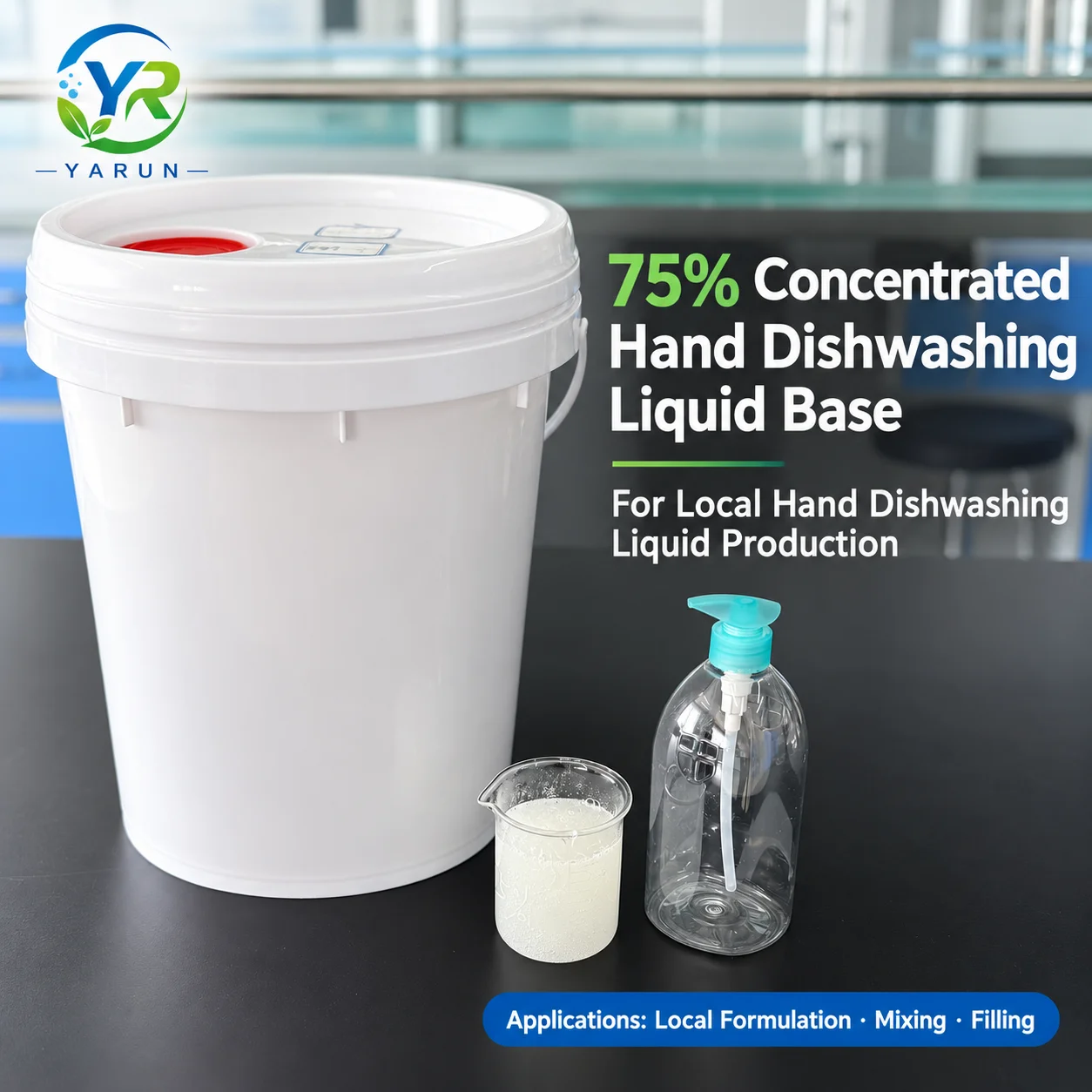
75% Concentrated Hand Dishwashing Liquid Base
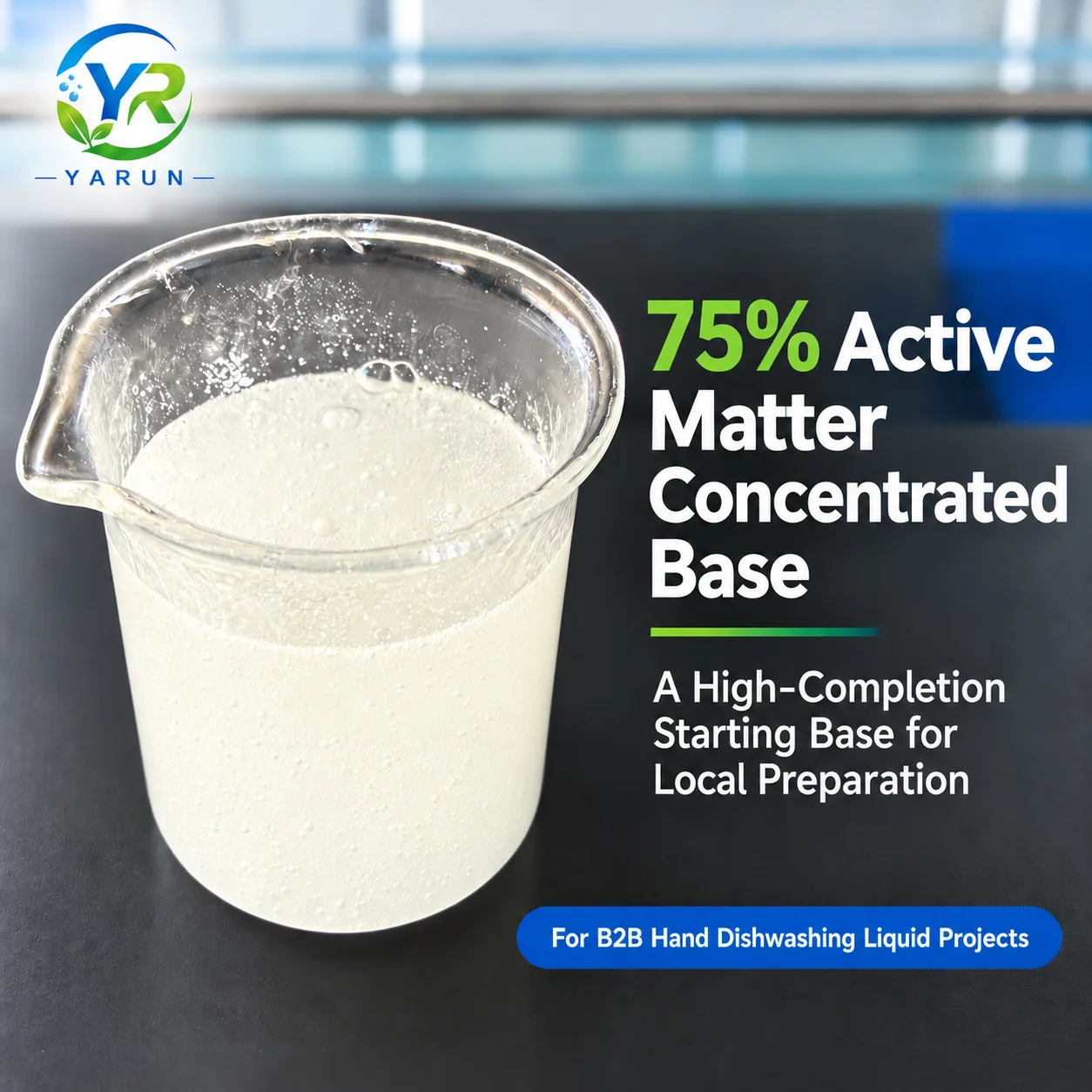
A 75% active-matter concentrated base developed for B2B hand dishwashing liquid projects. A reference preparation uses 1 kg of base with approximately 4 kg of water, sodium chloride and fragrance to produce approximately 5 kg of finished hand dishwashing liquid. Final formulation settings should be adjusted and verified according to local water quality, target viscosity, fragrance and finished-product requirements.
| NAME | VALUE |
|---|---|
| Base Active Matter | 75% |
| Reference Preparation Ratio | 1:4 by weight |
| Reference Preparation Route | 1 kg base + approx. 4 kg water, sodium chloride and fragrance |
| Reference Finished Yield | Approx. 5 kg finished hand dishwashing liquid from 1 kg base |
| Calculated Finished Active Matter | Approx. 15% based on the reference 1:4 mass preparation |
| HS Code | 34029000 |
| Packaging | 20 KG/drum |
Product Description
75% Concentrated Hand Dishwashing Liquid Base
YARUN 75% Concentrated Hand Dishwashing Liquid Base is developed for B2B customers who want to produce hand dishwashing liquid locally while reducing the volume of finished liquid that needs to be imported.
Instead of purchasing a complete finished detergent or sourcing multiple surfactants and formulation ingredients separately, customers can use a higher-completion base as the starting point for local production. The final product is then prepared locally through controlled addition of water and permitted adjustment components according to the required finished-product specification.
This route is designed for importers, distributors, private-label manufacturers and regional detergent producers that already have basic liquid mixing, filling and quality-control capability.
The value of the base is not simply its concentration. The key commercial advantage is that it provides a more controlled starting system for local manufacturing, while still allowing the finished product to be adjusted for local water quality, viscosity targets, fragrance preferences, packaging formats and market requirements.
A Practical Alternative to Importing Finished Liquid
Finished hand dishwashing liquid contains a large proportion of water. For international buyers, transporting that water can increase freight volume, storage pressure and landed cost.
A concentrated-base model changes the production route.
With local preparation, customers import the higher-value detergent base and complete the final liquid product closer to the target market. This can make the supply model more suitable for businesses that already operate local filling or light manufacturing facilities.
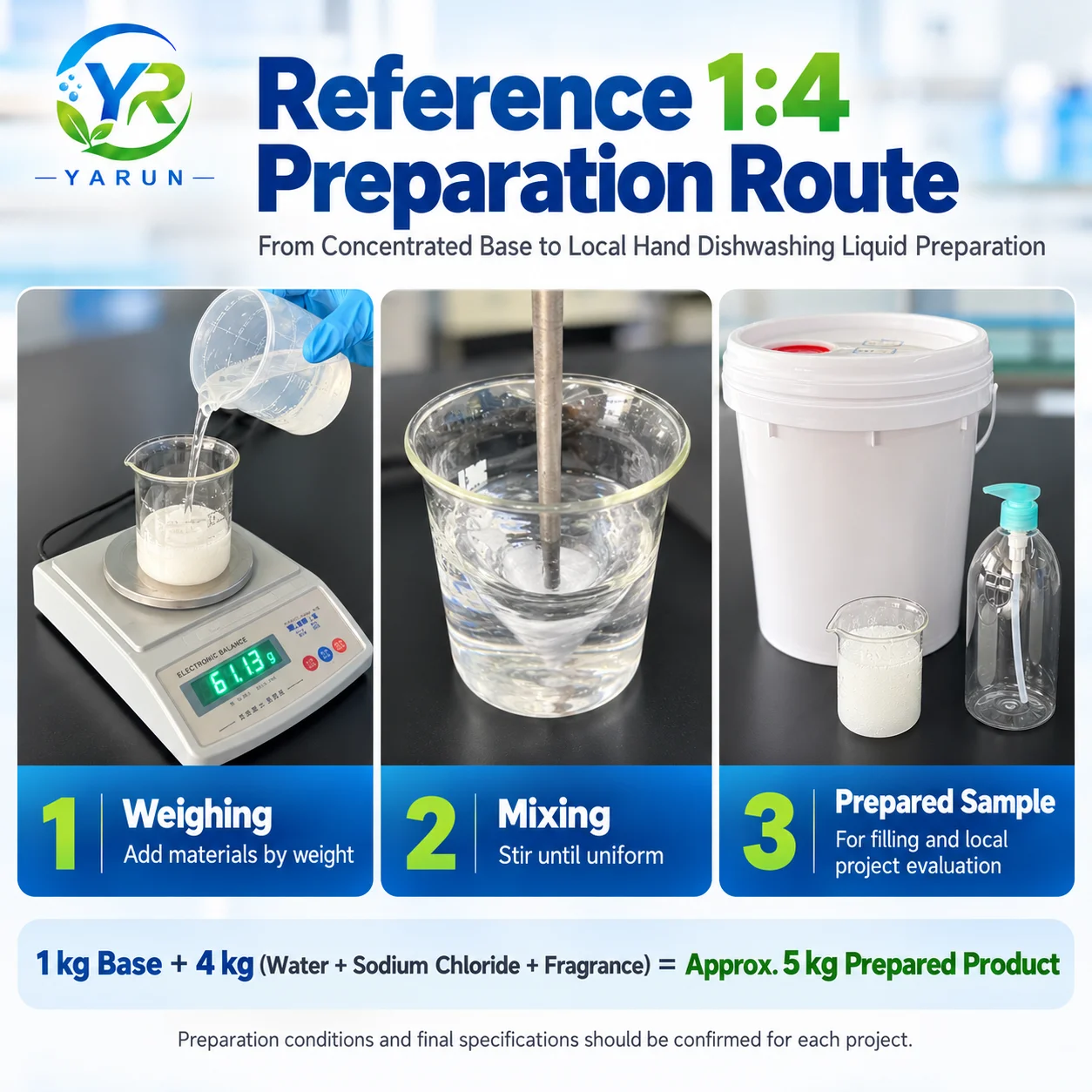
The reference preparation route for this product is based on a 1:4 mass ratio, where 1 kg of concentrated base is used with approximately 4 kg of water and permitted adjustment components to produce approximately 5 kg of finished hand dishwashing liquid.
Final preparation conditions should always be confirmed according to the required finished-product specification.
More Controlled Than Building a Formula from Raw Materials
For manufacturers purchasing individual raw materials, the main challenge is not simply obtaining surfactants. It is managing the complete formulation system.
A finished formulation may require control of:
- surfactant balance
- viscosity development
- fragrance compatibility
- water quality
- mixing sequence
- pH
- finished appearance
- batch consistency
A concentrated base reduces the number of formulation decisions that need to be rebuilt locally.
This does not eliminate the need for local adjustment and testing, but it can provide a more practical starting point for customers that want local production without developing the entire detergent formulation from individual raw materials.
For buyers comparing a concentrated-base route with purchasing individual surfactants and formulation ingredients, see our guide: Dishwashing Liquid Concentrate (Base) vs. Raw Materials: Which Manufacturing Route Fits Your Business
Built for Local Adjustment, Not a Fixed Universal Formula
Different markets do not always require the same finished hand dishwashing liquid.
Water hardness, fragrance preference, viscosity expectations, packaging format and local product requirements may vary by country and customer segment.
For a deeper understanding of how water quality, surfactant systems, viscosity, fragrance and production conditions affect hand dishwashing formulations, see our hand dishwashing formulation and scale-up guide .
For this reason, YARUN does not position the base as a universal “add water and sell” product.
The final preparation should be adjusted and verified according to the actual project.
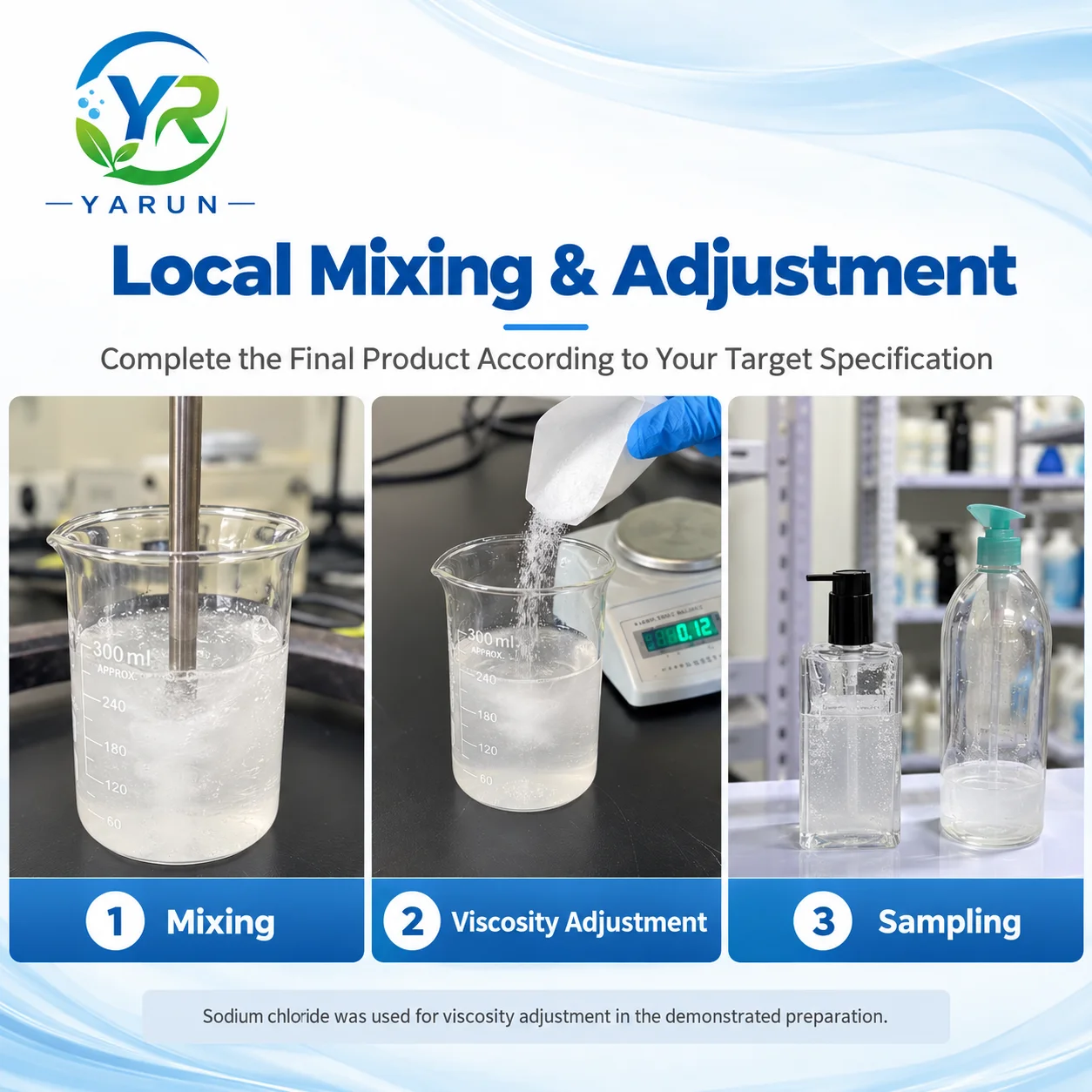
Typical local adjustments may include:
- water addition
- viscosity adjustment
- fragrance addition
- appearance adjustment
- final pH and viscosity confirmation
- packaging and filling setup
In the demonstrated preparation, sodium chloride was used as part of the viscosity adjustment process.
Reference Preparation and Finished-Product Testing
The reference preparation route uses:
1 kg 75% concentrated base + approximately 4 kg water, sodium chloride and fragrance
to produce approximately:
5 kg finished hand dishwashing liquid
Based on this mass balance, the calculated finished active matter is approximately 15%.
This value is a theoretical calculation based on the reference preparation route and should not replace finished-product testing.
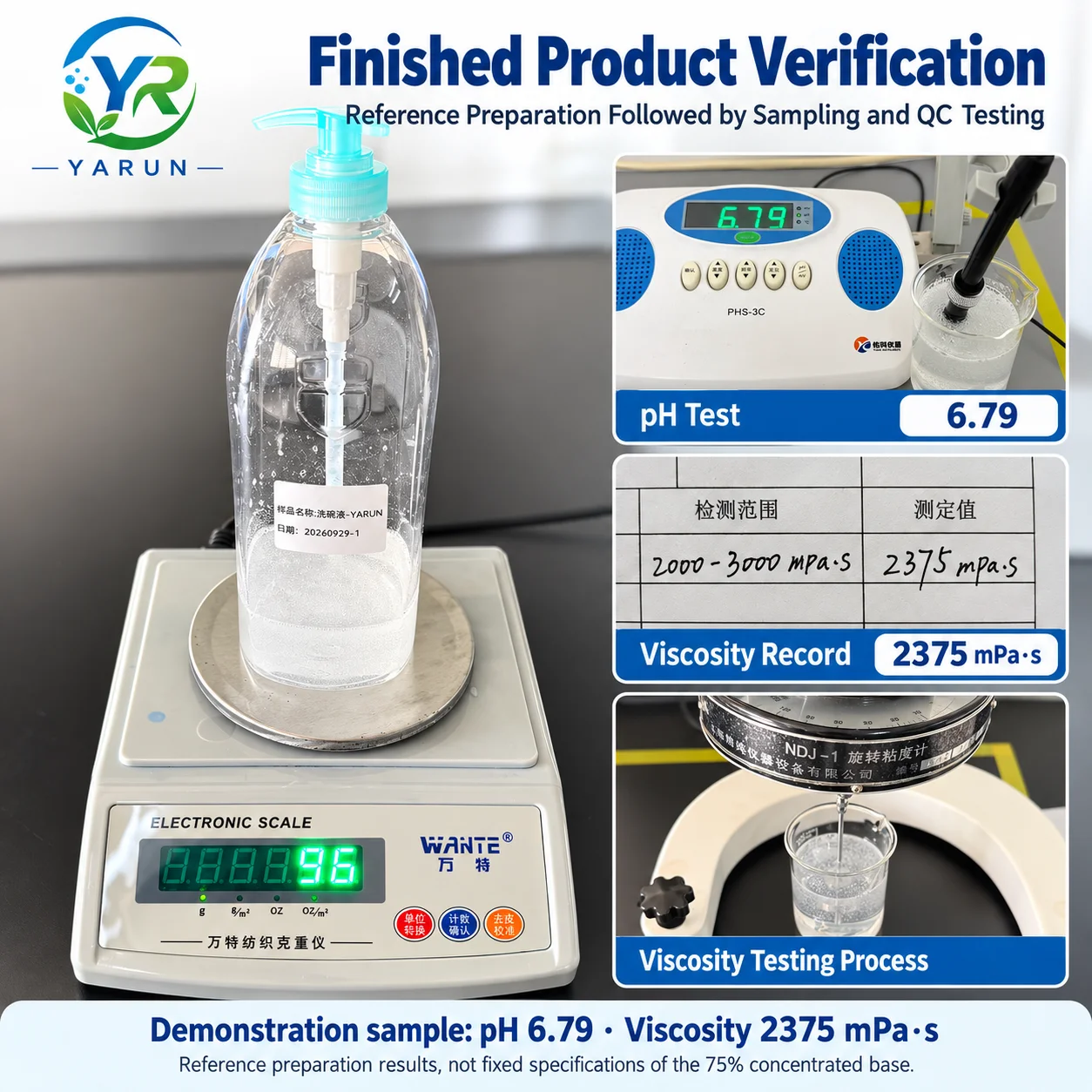
After preparation, the reference finished sample was tested for key physical parameters.
For the demonstrated batch:
pH: 6.79
Viscosity: 2375 mPa·s
These values are test results from the reference finished product, not fixed specifications of the concentrated base.
Before moving from a concentrate sample to commercial production, buyers should evaluate the complete preparation system, including local water, process conditions, finished-product testing and pilot verification. See: How to Evaluate a Detergent Concentrate Base Before Commercial Production
Suitable for B2B Local Production Projects
This product is intended for customers with basic liquid-detergent production capability, including:
- detergent manufacturers
- importers developing local production
- private-label producers
- distributors with mixing and filling capability
- regional household-cleaning product companies
- companies seeking to reduce dependence on imported finished liquid detergents
Before selecting the base, buyers should evaluate their local production conditions, including water quality, mixing equipment, filling capability, target product specification and testing requirements.
What YARUN Supports
YARUN supports the project from a manufacturing and commercial preparation perspective.
Depending on the project stage, the discussion can include:
- target finished-product positioning
- reference preparation route
- local water and equipment conditions
- viscosity and fragrance direction
- packaging requirements
- sample preparation
- finished-product testing requirements
- technical document requirements
- commercial quantity and delivery planning
The purpose is to confirm whether the concentrated-base route is suitable for the buyer before commercial production begins.
Why Buyers Consider This Route
For suitable B2B customers, the concentrated-base model can provide a different manufacturing option between two traditional routes:
Importing finished detergent
and
building the entire formula from individual raw materials
The base route allows customers to keep part of the production process local while starting from a more complete formulation system.
This can be particularly relevant for buyers who want to develop local detergent production without managing a large number of individual raw materials from the first stage.
Project Confirmation Before Commercial Production
Before commercial production, the following points should be confirmed:
- target finished-product specification
- local water quality
- preparation ratio
- viscosity target
- fragrance requirement
- mixing and filling equipment
- packaging format
- testing requirements
- required technical documentation
- commercial order quantity
Final specifications should be based on the confirmed project requirements and approved preparation results.
Discuss Your Hand Dishwashing Liquid Production Project
Tell us your target market, expected production volume, available mixing equipment, local water conditions and finished-product requirements.
YARUN can review the project conditions and discuss whether a concentrated-base production route is suitable for your operation.
Related Products
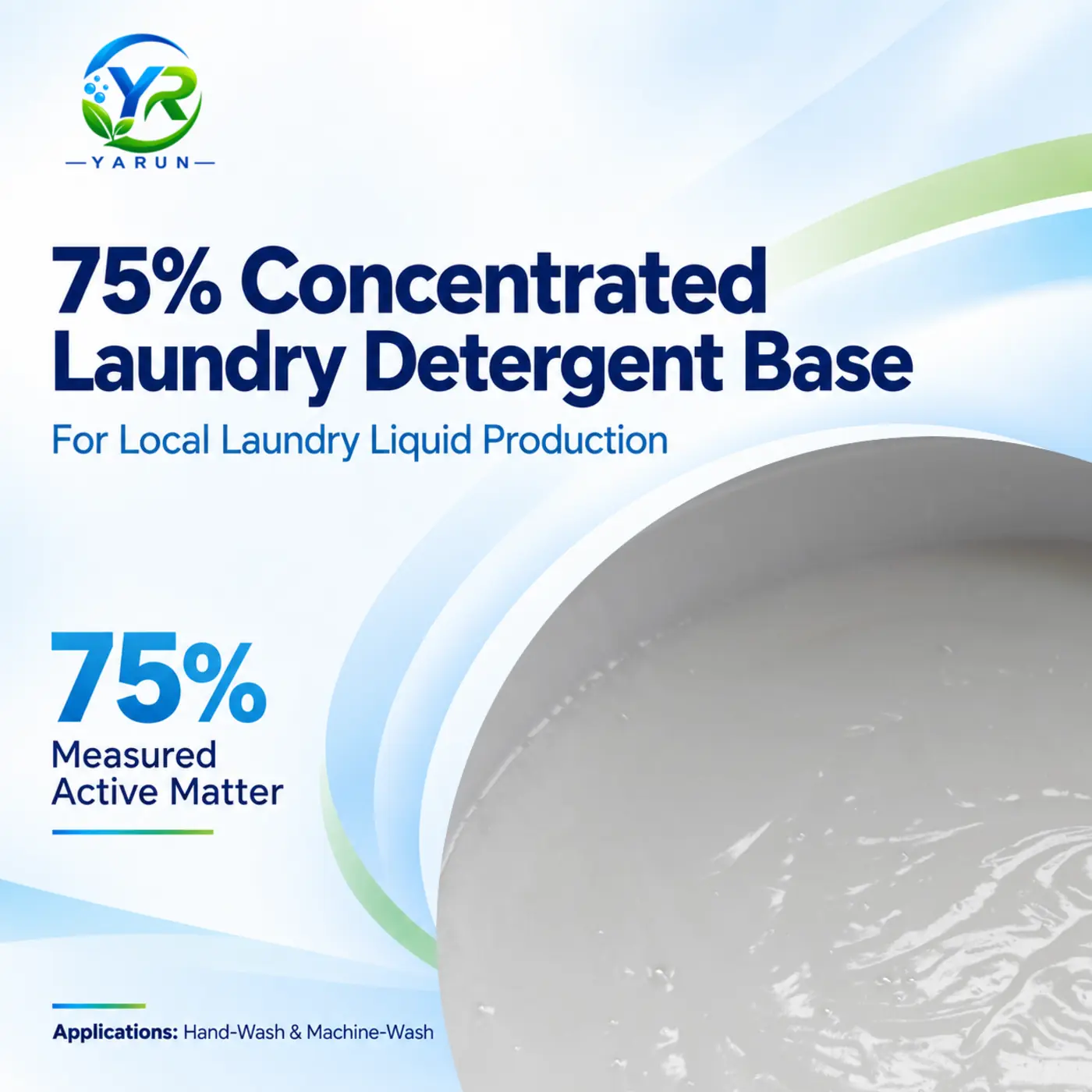
75% Concentrated Laundry Detergent Base
A concentrated laundry detergent base with 75% measured active matter for local laundry liquid production. The reference preparation route uses one part base and four parts combined preparation additions by weight. Prepared laundry liquid has been tested for hand-washing and machine-washing applications.
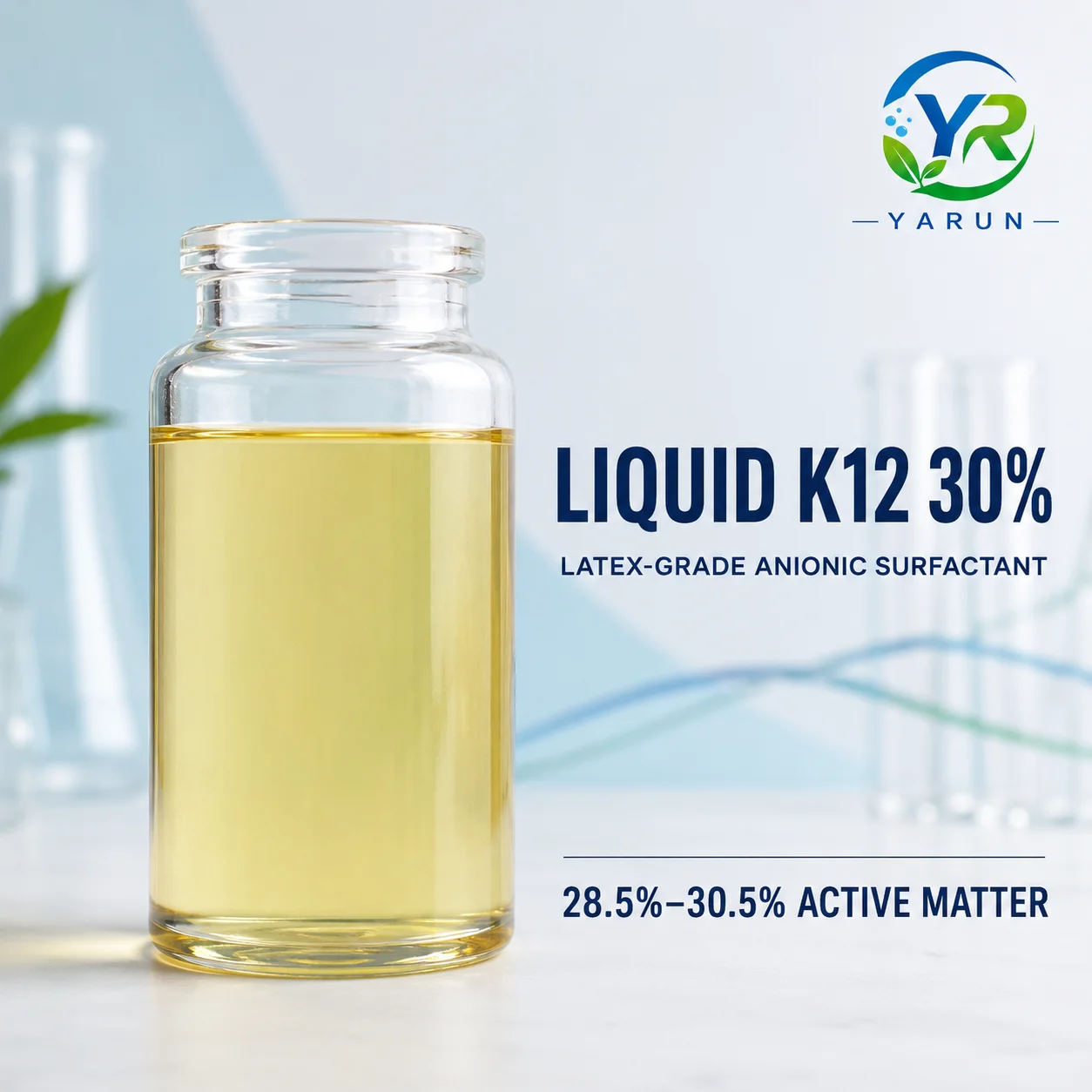
SLS Liquid 30% (Liquid K12) – Latex Grade
Liquid K12 30% is a latex-grade anionic surfactant supplied as a pale yellow transparent liquid with 28.5%–30.5% active matter. It is designed for liquid-phase dosing and may be evaluated as an emulsifier in selected synthetic latex, rubber and resin emulsion-polymerization systems. YARUN supplies the product in drums or IBC totes with a minimum order quantity of 1 MT. Final suitability depends on the applicable specification, processing conditions and completed formulation or polymerization trials.
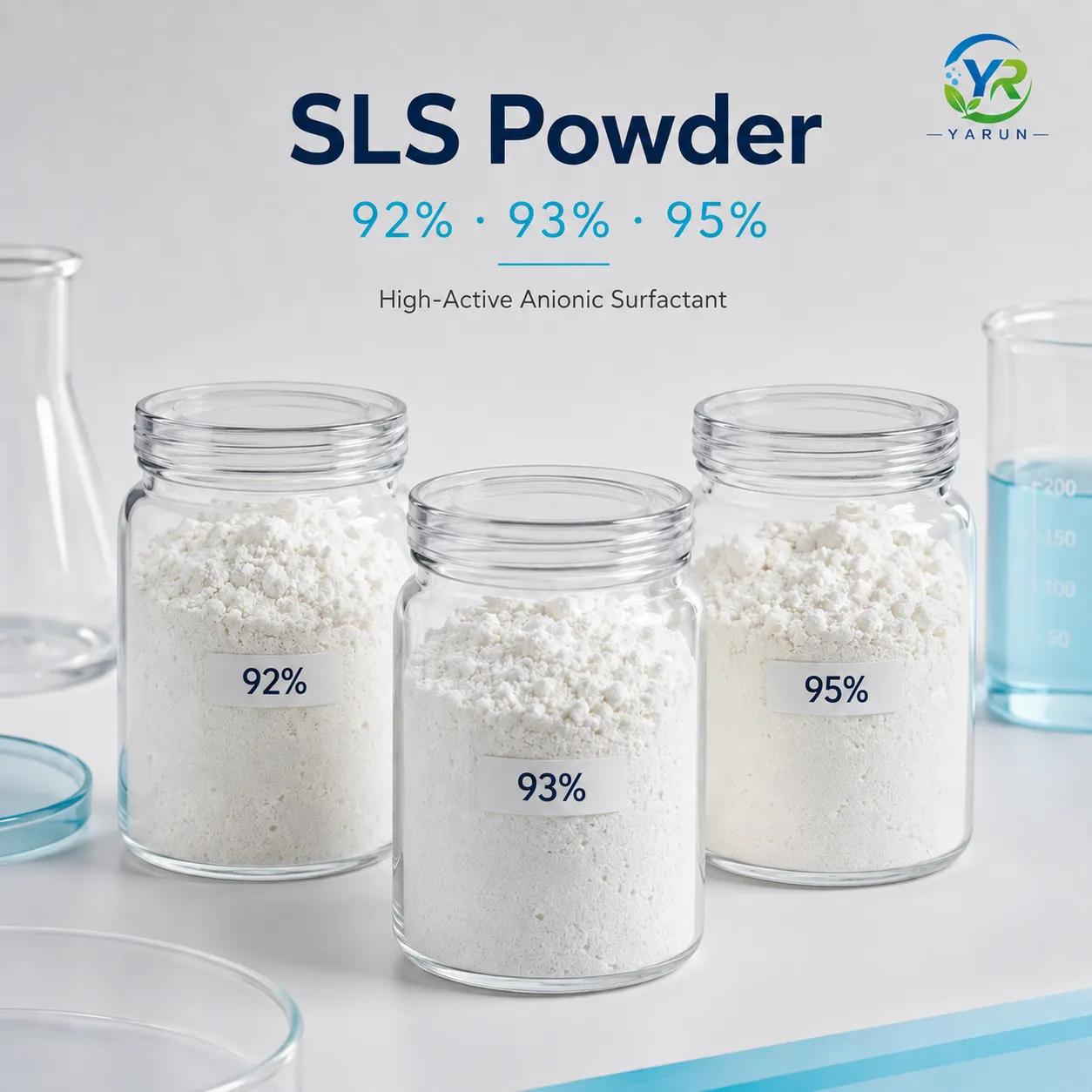
SLS Powder 92%, 93% and 95%
SLS Powder is a high-active anionic surfactant available in 92%, 93% and 95% grades. The three grades share the same powder form and fundamental surfactant mechanism but differ in active matter and sodium sulfate limits. YARUN helps detergent manufacturers compare grade concentration, inorganic-salt load, processing requirements and delivered cost per unit of active matter.
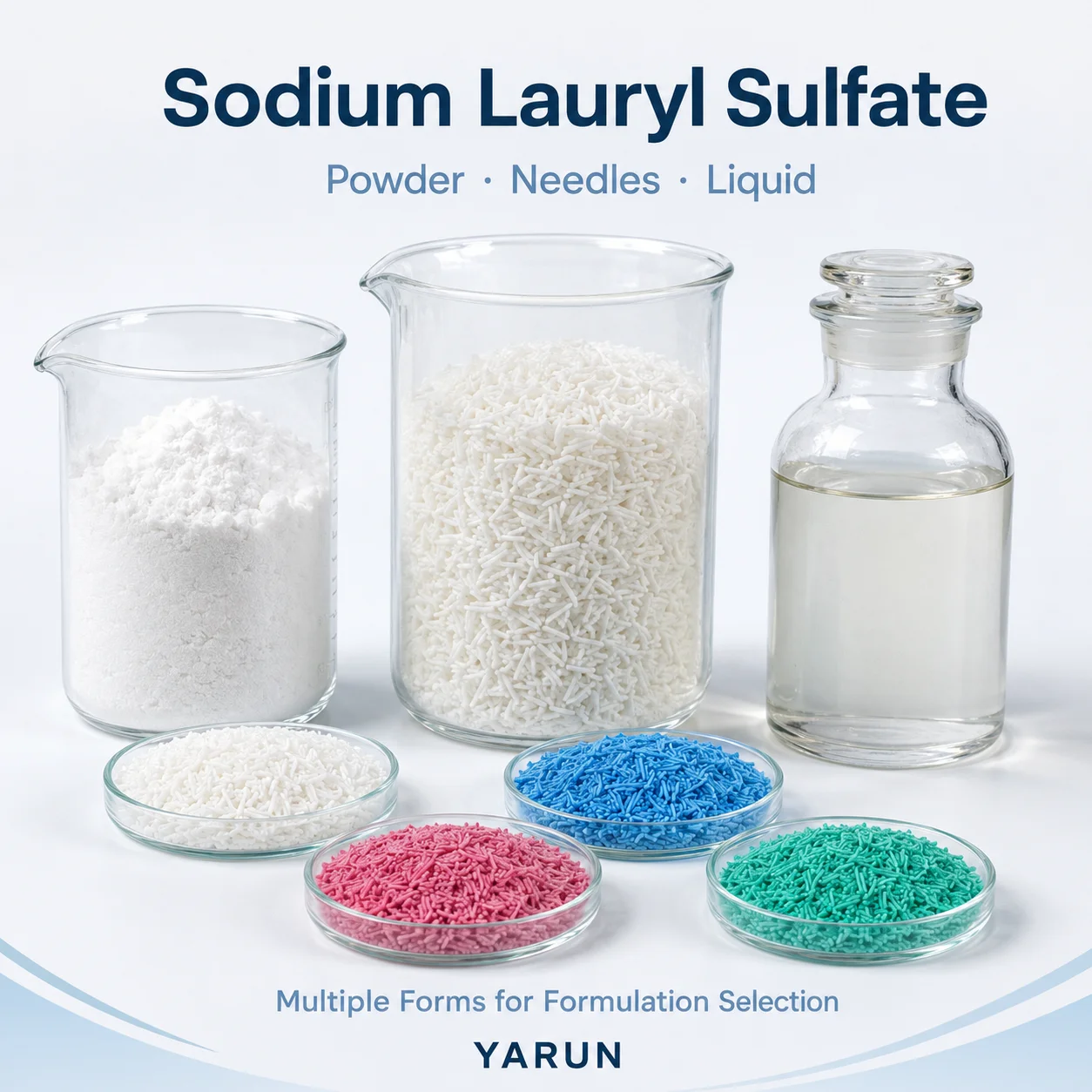
Sodium Lauryl Sulfate (SLS) – Forms, Grades and Selection
Sodium Lauryl Sulfate (SLS) is an anionic surfactant used for wetting, foaming, detergency and dispersion. YARUN offers SLS in powder, needle and liquid forms, including powder and needle grades at 92%, 93% and 95% active matter and SLS Liquid 30%. This page compares the available forms and helps buyers select an appropriate starting option according to product format, processing method and active-matter requirements.